Class 1 vs Class 2 vs Class 3 E-Bikes: A Plain-English Guide starts with the real-life ride: where the bike will live, how far it has to go, how much it weighs, and whether support will be easy after the sale.
Best fit
Riders who already know their main route, storage setup, and comfort needs.
Think twice if
You are shopping only by discount, advertised range, or motor wattage.


The e-bike class label is one of the most important details on a product page, yet many buyers skip it because motor watts and range look more exciting.
Key Takeaways
- Class 1 is pedal assist up to 20 mph.
- Class 2 includes throttle assist up to 20 mph.
- Class 3 generally means pedal assist up to 28 mph and may face more path restrictions.
Table of Contents
- The Practical Answer
- How to Apply This Before Buying
- Common Mistakes
- Recommended Next Steps
- Bottom Line
- FAQ
- Sources and Methodology
The Practical Answer
Class 1
Class 1 e-bikes provide assistance only while you pedal and stop assisting at 20 mph. They are often the easiest class to fit into bike-like rules, though local exceptions still matter.
Class 2
Class 2 e-bikes include a throttle that can propel the bike without pedaling up to 20 mph. That can help with starts, hills, and mobility, but some paths restrict throttle bikes.
Class 3
Class 3 e-bikes usually provide pedal assist up to 28 mph. They can be useful for longer road commutes but may be restricted on multi-use paths.
How to Apply This Before Buying
| Class | Assist type | Typical assist limit | Best for |
|---|---|---|---|
| Class 1 | Pedal assist only | 20 mph | Paths, casual commuting, bike-like feel |
| Class 2 | Throttle plus pedal assist | 20 mph throttle | Starts, errands, accessibility, cargo |
| Class 3 | Pedal assist | 28 mph | Longer road commutes where permitted |
The best e-bike buying decisions come from writing down your real weekly use: total miles, storage, stairs, rain exposure, hills, cargo, traffic speed, and where the bike will be parked. That small checklist prevents most expensive mistakes. It also helps you decide when a lighter bike, larger battery, step-through frame, cargo rack, or more conservative class setting is the right tradeoff.
Common Mistakes
- Buying Class 3 for a shared path commute without checking rules.
- Assuming a throttle makes every ride easier; it can also reduce range.
- Ignoring manufacturer class labels and local stickers.
- Riding at high assist around pedestrians.
Recommended Next Steps
Choose the lowest class that comfortably solves your route. If you need speed on roads, compare Class 3. If you need easy starts, compare Class 2. If access is the priority, Class 1 may be the safest bet.

Bottom Line
E-bike classes are not just technical labels. They shape access, etiquette, range, and the kind of riding experience you should expect.
Use Federal Labels, Then Check Local Rules
The three-class system is a helpful starting point, but it does not answer every access question. States, cities, parks, campuses, transit agencies, and trail managers can apply their own restrictions, especially around throttles and Class 3 speeds.
Before buying a faster or throttle-equipped bike, check where you plan to ride most often. The best legal setup is the one that keeps you on the routes you actually use, not the one that looks fastest on a product page.
This matters for shoppers because class configuration can affect trail access, insurance conversations, campus policies, rental-property rules, and whether a bike feels welcome on shared paths.
Why Class Choice Changes The Bike Experience
Class 1 bikes can feel the most bicycle-like because assist is tied to pedaling. Class 2 bikes add throttle convenience for starts, hills, or riders who need a break. Class 3 bikes can be excellent for road commuting, but the higher assisted speed may reduce access on some shared paths.
None of those classes is automatically best. The right answer depends on local rules, route speed, comfort around traffic, and how much assistance the rider needs to keep the bike useful.
A buyer who wants maximum access may prefer a lower class. A rider who spends more time in traffic may value a faster pedal-assist setup. A rider who needs help from a dead stop may care more about throttle behavior.
Practical Rule-Checking
Check state guidance first, then city or county rules, then the specific trail, park, campus, or transit agency you plan to use. The most specific rule is often the one that matters in daily life.
If a product page says a bike is configurable, verify what that means before buying. Some settings may be adjustable, but riders are still responsible for using the bike legally in the place they are riding.
How I Would Use This Information
The best way to read this guide is to start with the job the bike has to do. A weekend path bike, a daily commuter, a compact apartment bike, and a car-replacement cargo setup can all look similar in photos, but they ask very different things from the frame, battery, tires, and brakes.
I also like to separate showroom appeal from ownership fit. A big battery, fat tires, or a powerful motor can be useful, but those same features can add weight, slow down handling, or make the bike harder to lift, store, and service. The right choice is usually the bike that solves the boring daily details with the least friction.
That is why I would not read any recommendation as a universal ranking. A bike that is excellent for a garage, a flat commute, and weekend rail trails may be a poor match for a third-floor apartment or a rider who needs dealer support nearby.
The Details That Matter After Delivery
Before choosing any model, check the return policy, warranty terms, replacement battery availability, brake and tire sizes, and whether a local shop is willing to work on that brand. Those details rarely feel exciting while shopping, but they can decide whether the bike still feels like a good purchase in year two.
For U.S. riders, I would also check local class rules and where the bike will actually be used. A faster setup is not automatically better if the local trail system, campus, beach path, or neighborhood greenway restricts throttle use or Class 3 operation.
Assembly is another quiet detail. Some direct-to-consumer e-bikes are easy to finish at home, while others are better handled by a shop, especially if the buyer is not comfortable adjusting brakes, tightening cockpit hardware, or checking wheel alignment.
How To Read Product Photos
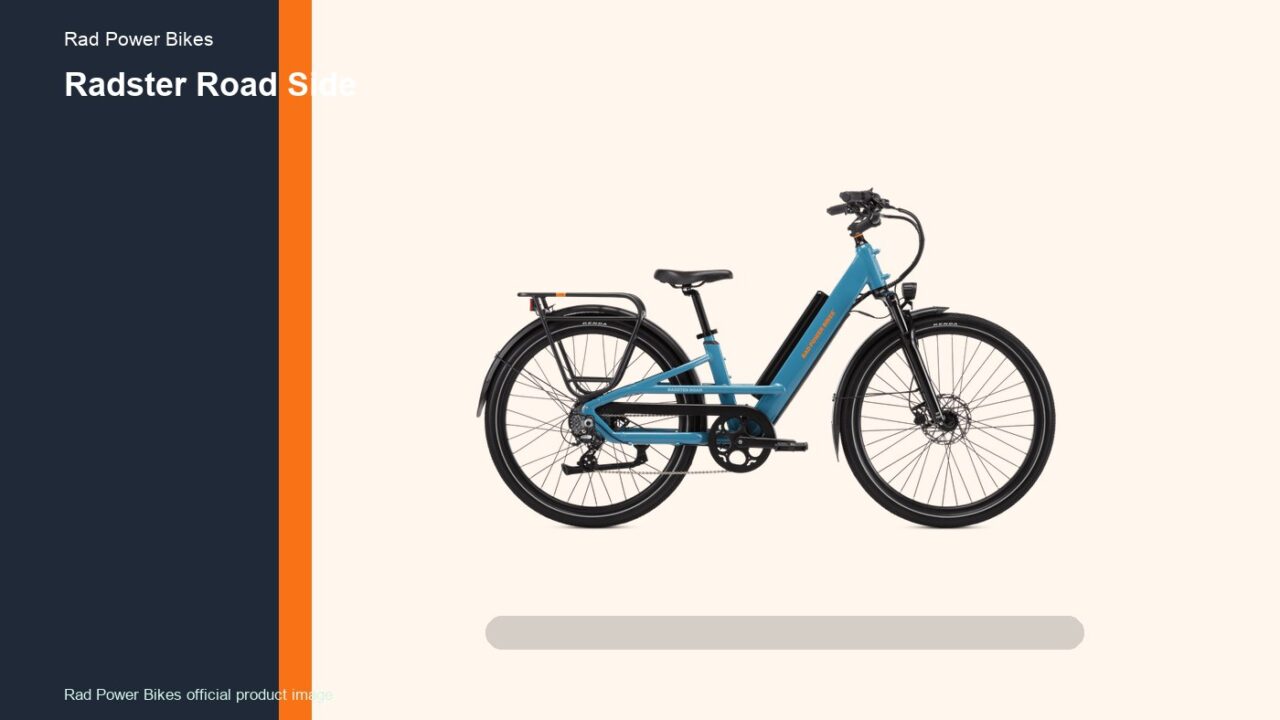
Product photos are useful when they show the whole bike from the side, the cockpit, the drivetrain side, rack mounting points, tire clearance, lighting, and battery placement. A clean hero image is not enough by itself because many ownership details live in the small angles.
I pay close attention to cable routing, fender clearance, rack attachment points, the shape of the step-through opening, and whether the display and controls look easy to reach. Those details can reveal whether a bike was designed around everyday use or mainly around a spec sheet.
A Better Final Check
Before buying, make a quick pass through five questions: where will the bike sleep, where will the battery charge, who will service it, what class is allowed on the main route, and what accessory will be needed on day one.
If any of those answers feels awkward, the bike may still be good but not good for your situation. That last practical check is often more useful than reading one more range claim or waiting for one more seasonal sale.
A More Useful Way To Decide
For Class 1 vs Class 2 vs Class 3 E-Bikes: A Plain-English Guide, the useful lens is legal access. I would start by asking what the bike or topic needs to solve in a normal week, then work backward from storage, charging, route type, rider confidence, and service expectations.
That order keeps the decision grounded. It is easy to compare specs for an hour and still miss the basic problem: a bike can be powerful, attractive, and discounted while still being too heavy, too awkward to store, or too specialized for the rider's actual roads.
Where I Would Be Careful
Check state-level e-bike class guidance first, then the city, park, campus, trail, or transit agency where the bike will actually be used. Product pages can explain the bike, but they do not override local access rules.
I would slow down if the product page hides key details, if replacement parts are difficult to find, if sizing guidance is vague, or if the buying decision depends entirely on a short-term sale. A good e-bike purchase should still make sense after the banner discount disappears.
What To Compare Next
The nearest alternative is not always another bike. Sometimes it is choosing a lower class configuration, disabling a mode where required, or picking a bike whose assisted speed better matches shared-path etiquette.
When two options look close, compare the reason each one exists. One may be built for comfort, another for value, another for portability, and another for higher-speed road commuting. The best choice is the one whose design intent matches the rider instead of merely matching the budget.
Living With The Bike After Week One
Imagine the bike one month after delivery. It should be easy to charge, easy to lock, easy to park, and easy enough to ride that it becomes a normal transportation tool rather than a weekend novelty.
That ownership test is intentionally plain. The right e-bike does not need to win every comparison chart; it needs to keep solving the same real problem without creating a new one.
A Real-World Example
For Class 1 vs Class 2 vs Class 3 E-Bikes: A Plain-English Guide, I would run the recommendation through a simple real-world scenario rather than stopping at the comparison table.
A useful example is the rider who wants one bike for a suburban street commute and a weekend paved trail. A throttle or Class 3 assist may sound helpful for the street segment, but the trail segment may have stricter access expectations. That rider should check the actual route before choosing the fastest configuration.
Another example is a campus or apartment rider. Even if state law allows a certain e-bike class, a property manager, school, or transit operator may set its own storage or access rules. Those rules can matter more in daily life than the general statewide definition.
For buying decisions, this means the legal check should happen before the final model comparison. If the preferred route favors Class 1 access, a high-speed Class 3 commuter may be the wrong tool. If the route is mostly road shoulder and traffic, a Class 3 setup may be worth considering where allowed.
The practical answer is rarely to memorize every rule in the country. It is to know the class of the bike being purchased, understand how throttle and assisted speed work, and verify the rules in the places the rider will use most often.
That kind of scenario check keeps the final decision honest. It turns the article from a list of features into a buying decision a real person can actually use.
Final Reader Note
The reason to spend extra time with Class 1 vs Class 2 vs Class 3 E-Bikes: A Plain-English Guide is not to make the purchase more complicated. It is to remove the surprises that usually show up after delivery, when the bike has to fit real streets, real storage, and real riding habits.
A good decision should feel clear even without a sale banner or a dramatic spec advantage. If the bike, rule, or maintenance habit still makes sense in ordinary use, through changing seasons and normal weekly routines, it is much more likely to be the right answer.
FAQ
Which e-bike class is best?
Class 1 is simplest for access, Class 2 is helpful for throttle starts, and Class 3 is best for faster road commuting where allowed.
Can a bike be configurable between classes?
Some e-bikes offer adjustable settings or labels, but riders must still follow local rules.
Does Class 3 mean 28 mph with throttle?
Usually no. In many class systems, Class 3 is pedal assist up to 28 mph, not throttle to 28 mph.