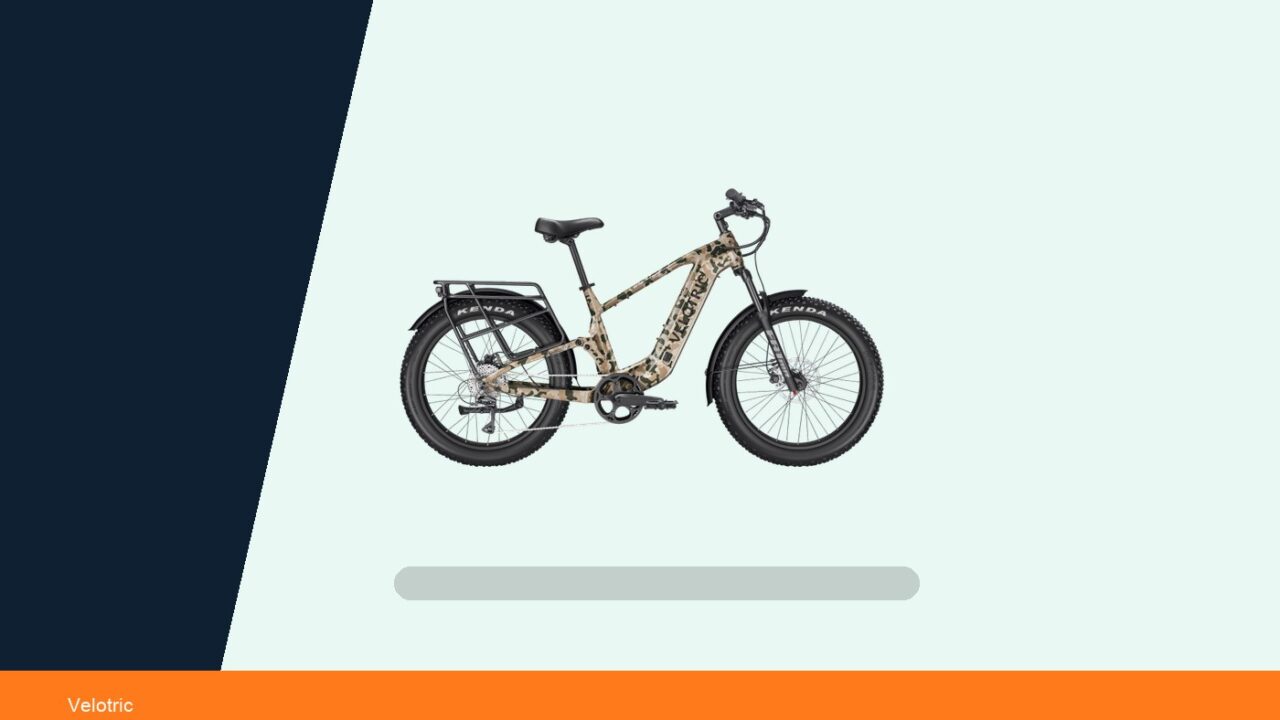
Velotric Nomad 2 and Nomad 2X Review: Fat Tire E-Bike Guide looks at the brand in context rather than treating one model or discount as the whole story. Velotric is worth comparing, but it should sit beside Aventon, Lectric, Rad Power Bikes, Ride1Up, and local dealer options.
Frame shape and weight matter daily.
Use route plus margin, not best-case claims.
Parts and service decide long-term value.


Velotric’s Nomad line is for riders who want the confidence of fat tires and the ability to handle rougher surfaces than a typical city commuter.
The Short Version
- Nomad 2 is the more straightforward fat tire option; Nomad 2X adds a more all-terrain, heavy-duty positioning.
- Fat tire comfort comes with weight and range tradeoffs.
- Choose Nomad only if your terrain justifies the extra tire and frame mass.
Table of Contents
- Official Specs Checked
- What This Means on Real U.S. Routes
- Pros and Cons
- Who Should Buy It
- Discount Code and Buying Notes
- Bottom Line
- FAQ
- Sources and Methodology
Official Specs Checked
| Model | Category | Motor | Range note | Current listed price | Source |
|---|---|---|---|---|---|
| Velotric Nomad 2 Fat Tire Ebike | Fat Tire | 750W | varies by configuration and riding mode | $1,799 | Official page |
| Velotric Nomad 2X Full Suspension Fat Tire Ebike | Fat Tire Full Suspension | high-torque fat-tire system | varies by configuration and rider input | $2,199 | Official page |
The table above uses Velotric’s official product data and public product listings. Because direct-to-consumer e-bike brands frequently adjust sale prices, bundles, accessory gifts, and component availability, treat the price as a snapshot and confirm the final number on the official page before checkout.
Velotric Nomad 2: positioning
Velotric Nomad 2 Fat Tire Ebike is positioned as a fat tire model. Velotric currently lists it at $1,799 before any checkout-specific promotions, with 750W power information and a range note of varies by configuration and riding mode. The strongest fit is rough roads, gravel shoulders, beach towns, winter traction needs.
From an editorial buying standpoint, the question is whether that category solves your actual transportation problem. A commuter model should be stable, visible, comfortable, and easy to accessorize. A folding model should be judged by storage size and how often you truly need to lift it. A fat tire bike should be judged by traction, brake control, and whether the extra weight is worth the confidence on loose surfaces.
Velotric Nomad 2X: positioning
Velotric Nomad 2X Full Suspension Fat Tire Ebike is positioned as a fat tire full suspension model. Velotric currently lists it at $2,199 before any checkout-specific promotions, with high-torque fat-tire system power information and a range note of varies by configuration and rider input. The strongest fit is all-terrain riders who want more comfort and carrying capacity.
From an editorial buying standpoint, the question is whether that category solves your actual transportation problem. A commuter model should be stable, visible, comfortable, and easy to accessorize. A folding model should be judged by storage size and how often you truly need to lift it. A fat tire bike should be judged by traction, brake control, and whether the extra weight is worth the confidence on loose surfaces.
What This Means on Real U.S. Routes
For a U.S. buyer, an e-bike lives in a complicated mix of road shoulders, apartment storage, neighborhood paths, greenways, local ordinances, and sometimes steep driveways. Velotric’s current lineup is strongest when the buyer wants comfort, value, and practical included features rather than a minimal analog-bike feel. That does not make every Velotric model right for every rider, but it makes the brand worth shortlisting for commuters and recreational riders who want an approachable setup.
If your route includes shared-use paths, verify class settings before you ride. Many Velotric models advertise higher assisted speeds where permitted, but a rider still has to follow local rules. On paths with pedestrians, children, dogs, and runners, lower assist settings and predictable passing behavior matter more than top speed.
Pros and Cons
| Pros | Cons |
|---|---|
| Fat tires add traction and confidence | Heavier and less efficient than commuter tires |
| Nomad 2X targets more demanding all-terrain use | More capability can mean more cost and more bike to store |
| Good for rough routes and recreational riding | Not the best choice for riders who only use smooth pavement |
Who Should Buy It
Beach or snow rider
Nomad models are worth comparing if local rules allow your route and you can maintain tires and drivetrain.
Suburban pothole rider
Fat tires can add comfort, but compare weight before buying.
Performance commuter
A lighter commuter may be better if speed and efficiency matter more than traction.

Discount Code and Buying Notes
You can check the current Velotric price through Robert Brown’s Velotric affiliate link. At checkout, enter REF601753 for $60 off. Do not assume the code stacks with every promotion or applies forever; Velotric’s current checkout terms should be treated as the final source.
Before buying, compare frame size, accessory needs, expected storage, return policy, shipping timing, and support options. If you are choosing for an older rider or a shorter rider, prioritize step-through access, low-speed balance, brake feel, and the ability to put a foot down quickly.
Bottom Line
The Nomad 2 and Nomad 2X make the most sense for riders whose routes include loose, rough, or variable surfaces. For smooth city commutes, Velotric’s commuter models may be easier to live with.
Where Velotric Fits In A Shortlist
Velotric tends to make the most sense for shoppers who want approachable comfort, modern styling, and a direct-to-consumer buying process without jumping into the highest-priced premium tier. It should still be compared against Aventon, Lectric, Rad Power Bikes, Ride1Up, and local bike-shop options.
I would treat Velotric as a serious shortlist candidate when the frame style, support terms, battery certification details, and current price all line up with the rider's use case. A discount code can help, but it should not be the main reason to choose the wrong category of bike.
The most important thing is choosing the right Velotric family first. A commuter model, fat tire model, folding bike, and hybrid trail-leaning bike solve different problems, even if the sale price makes two options look close.
How To Read The Discount
For eligible Velotric purchases, Robert Brown's code REF601753 may provide $60 off at checkout. The checkout page and Velotric's current terms should always be treated as the final authority because promotions can change.
The more useful shopping habit is to compare the final delivered price, included accessories, warranty terms, and replacement-part availability. That gives a cleaner picture than comparing headline sale prices from different brands.
If the discount works, treat it as a small improvement to a bike you already wanted. If the bike's weight, frame style, range estimate, or class configuration does not fit your route, the discount should not carry the decision.
Velotric Fit Notes
Velotric's appeal is strongest when the rider wants a polished online-buying experience and a bike that feels approachable rather than overly technical. That can be a good fit for commuters, casual recreational riders, and riders moving from a traditional bicycle into pedal assist.
Shoppers should still verify the exact current model page before buying. Battery details, color availability, included accessories, and sale pricing can shift, and those specifics matter more than a general brand impression.
How I Would Use This Information
The best way to read this guide is to start with the job the bike has to do. A weekend path bike, a daily commuter, a compact apartment bike, and a car-replacement cargo setup can all look similar in photos, but they ask very different things from the frame, battery, tires, and brakes.
I also like to separate showroom appeal from ownership fit. A big battery, fat tires, or a powerful motor can be useful, but those same features can add weight, slow down handling, or make the bike harder to lift, store, and service. The right choice is usually the bike that solves the boring daily details with the least friction.
That is why I would not read any recommendation as a universal ranking. A bike that is excellent for a garage, a flat commute, and weekend rail trails may be a poor match for a third-floor apartment or a rider who needs dealer support nearby.
The Details That Matter After Delivery
Before choosing any model, check the return policy, warranty terms, replacement battery availability, brake and tire sizes, and whether a local shop is willing to work on that brand. Those details rarely feel exciting while shopping, but they can decide whether the bike still feels like a good purchase in year two.
For U.S. riders, I would also check local class rules and where the bike will actually be used. A faster setup is not automatically better if the local trail system, campus, beach path, or neighborhood greenway restricts throttle use or Class 3 operation.
Assembly is another quiet detail. Some direct-to-consumer e-bikes are easy to finish at home, while others are better handled by a shop, especially if the buyer is not comfortable adjusting brakes, tightening cockpit hardware, or checking wheel alignment.
How To Read Product Photos
Product photos are useful when they show the whole bike from the side, the cockpit, the drivetrain side, rack mounting points, tire clearance, lighting, and battery placement. A clean hero image is not enough by itself because many ownership details live in the small angles.
I pay close attention to cable routing, fender clearance, rack attachment points, the shape of the step-through opening, and whether the display and controls look easy to reach. Those details can reveal whether a bike was designed around everyday use or mainly around a spec sheet.
A Better Final Check
Before buying, make a quick pass through five questions: where will the bike sleep, where will the battery charge, who will service it, what class is allowed on the main route, and what accessory will be needed on day one.
If any of those answers feels awkward, the bike may still be good but not good for your situation. That last practical check is often more useful than reading one more range claim or waiting for one more seasonal sale.
A More Useful Way To Decide
For Velotric Nomad 2 and Nomad 2X Review: Fat Tire E-Bike Guide, the useful lens is Velotric model fit. I would start by asking what the bike or topic needs to solve in a normal week, then work backward from storage, charging, route type, rider confidence, and service expectations.
That order keeps the decision grounded. It is easy to compare specs for an hour and still miss the basic problem: a bike can be powerful, attractive, and discounted while still being too heavy, too awkward to store, or too specialized for the rider's actual roads.
Where I Would Be Careful
Verify the current Velotric product page for the exact model, frame option, battery details, class setting, included accessories, and current checkout terms. If using REF601753, confirm the discount on the checkout screen before assuming it applies.
I would slow down if the product page hides key details, if replacement parts are difficult to find, if sizing guidance is vague, or if the buying decision depends entirely on a short-term sale. A good e-bike purchase should still make sense after the banner discount disappears.
What To Compare Next
The closest alternatives are often Aventon for a polished commuter feel, Lectric for compact value, Rad Power Bikes for utility options, and Ride1Up for price-to-spec comparison.
When two options look close, compare the reason each one exists. One may be built for comfort, another for value, another for portability, and another for higher-speed road commuting. The best choice is the one whose design intent matches the rider instead of merely matching the budget.
Living With The Bike After Week One
Imagine the bike one month after delivery. It should be easy to charge, easy to lock, easy to park, and easy enough to ride that it becomes a normal transportation tool rather than a weekend novelty.
That ownership test is intentionally plain. The right e-bike does not need to win every comparison chart; it needs to keep solving the same real problem without creating a new one.
FAQ
What is the difference between Nomad 2 and Nomad 2X?
Nomad 2 is the simpler fat tire option, while Nomad 2X is positioned for more demanding all-terrain use. Check current Velotric specs before buying.
Can I use code REF601753 on Nomad models?
Try REF601753 at Velotric checkout for $60 off, subject to current terms.
Are fat tire e-bikes good for seniors?
They can feel stable, but their weight can be a drawback. Seniors should prioritize step-through access, brake confidence, and manageable weight.