Best E-Bikes for Weekend Recreation: Comfortable Bikes for Paths, Parks, and Light Adventure starts with the real-life ride: where the bike will live, how far it has to go, how much it weighs, and whether support will be easy after the sale.
How I would read this guide
Use the photos and specs as orientation, then read the tradeoffs. A bike that looks perfect online can still be the wrong bike if it is too heavy, hard to service, awkward to park, or mismatched to local rules.


This guide is written for U.S. shoppers who want a practical answer before opening ten different product pages. It focuses on daily use, fit, ownership risk, and buying sequence instead of pretending one e-bike is perfect for every rider.
Where This One Lands
A weekend recreation e-bike should be comfortable, easy to control, and versatile enough for paved paths, park roads, and occasional rough surfaces. Shoppers should compare comfort cruisers, hybrid e-bikes, and lighter city models before jumping to a heavy fat tire bike.
- Comfort geometry matters more than race-bike efficiency.
- Hybrid tires are often enough for paths and light gravel.
- A removable battery and easy charging routine make spontaneous rides more likely.
Who This Helps Most
This guide is for riders who want fun weekend trips, not necessarily a daily car replacement.
A useful e-bike recommendation starts with the rider, not the model name. A rider with a seven-mile paved commute, secure indoor storage, and one flight of stairs should not shop the same way as a retiree who needs a low step-through frame or a weekend rider who wants stability on gravel access roads. The right question is not simply which bike has the biggest battery; it is which bike removes the most friction from the rides you will actually take.
What To Compare Before Price
| Decision factor | What to check | Why it matters |
|---|---|---|
| Route type | Paved paths, gravel, hills, beach roads | Terrain determines tire width and suspension needs |
| Ride posture | Upright, slightly active, or sporty | Comfort affects how long you stay out |
| Range buffer | Two typical weekend rides per charge | Reduces range anxiety |
| Transport | Car rack rating and bike weight | Weekend bikes often travel by vehicle |
Building a Useful Shortlist
Start with frame style and fit. A bike that is awkward to mount, hard to balance at a stop, or too heavy to move through a garage will get ridden less, even if the specification sheet looks impressive. Step-through frames are often easier for riders with limited hip mobility, cargo loads, or frequent stop-and-go routes. Traditional high-step frames can feel more familiar to riders coming from fitness bikes, but they are not automatically better for commuting.
Next, look at the motor and control style. Torque sensors usually feel more natural because assist rises with pedal pressure, while cadence sensors can feel more on-off. Throttle availability is useful for starts on hills or when carrying cargo, but some paths and local rules may treat throttle bikes differently. Class 3 capability can help on road commutes, but it can also limit access on some paths.
Battery range should be treated as a planning estimate, not a promise. Brands often publish best-case or controlled-condition numbers. Real range drops with higher assist, cold weather, hills, heavy riders, soft tires, cargo, and frequent throttle use. For most U.S. commuters, a comfortable target is enough battery for the round trip plus errands plus a safety margin, rather than buying the largest pack possible.
Real-World Ownership Notes
Weight matters more than many first-time buyers expect. A 75 lb fat tire bike can feel stable and comfortable once rolling, but it is a very different object to lift onto a rack, carry up steps, or maneuver through an apartment hallway. If you need to transport the bike by car, confirm rack capacity before buying, because many standard hitch racks are not rated for heavier e-bikes with batteries installed.
Service support also belongs in the decision. Direct-to-consumer brands can offer strong value, but local shops may vary in what they are willing to service, especially on electrical systems. Before buying, check whether the brand has dealer support near you, whether replacement parts are easy to order, and whether a local shop will handle brakes, tires, drivetrain, and basic diagnostics.
Safety certification deserves attention. Battery fires are uncommon relative to total ridership, but the consequences can be serious. Favor reputable brands, original chargers, undamaged batteries, and documented electrical safety standards when available. Avoid bargain batteries, incompatible chargers, and storage practices that block exits or expose the pack to extreme heat.
The Last Pass
- Confirm the bike class and whether your local paths allow it.
- Check total loaded weight, not just rider weight.
- Measure standover height, reach, and handlebar position against your body and mobility needs.
- Compare battery watt-hours, charger type, and replacement battery availability.
- Look for hydraulic brakes or well-supported mechanical brakes on heavier bikes.
- Budget for a lock, helmet, tire pump, lights, rack or panniers, and basic maintenance.
- Verify final price, shipping, return window, warranty, and local service options before checkout.

Easy Things To Miss
The first mistake is buying only by advertised range. Range is useful, but it is not comfort, fit, braking, support, or legal access. The second mistake is ignoring storage. A bike that cannot be stored safely and conveniently becomes a problem, especially in apartments, condos, and winter climates. The third mistake is treating online reviews as if every rider has the same route. A glowing review from a flat coastal city may not translate to a hilly suburb with rough pavement and four-season weather.
The better approach is to write down your route, cargo needs, parking situation, local rules, and service plan before comparing models. Once those constraints are clear, the right bike usually becomes easier to spot. The best e-bike is not the one with the largest spec number; it is the one you will confidently ride, maintain, and charge without turning every trip into a workaround.
Internal Reading Next
- Best Commuter E-Bikes for U.S. Riders
- Class 1 vs Class 2 vs Class 3 E-Bikes
- How Much E-Bike Range Do You Really Need?
- E-Bike Battery Maintenance Tips
How To Compare Bikes In This Category
A useful shortlist should include at least one comfort-focused option, one value-focused option, and one support-focused option. That gives you a better sense of what you are paying for instead of comparing only motor wattage or sale prices.
Look for the point where the tradeoff becomes unacceptable. For one rider, that may be weight. For another, it may be lack of local service, a low payload rating, a cramped cockpit, or a battery that cannot support longer weekend rides.
The comparison gets clearer when you write down the top two jobs the bike must do. A model that is second-best at ten things may still be the best choice if it is excellent at the two jobs that matter.
When A More Expensive Bike Is Worth It
Paying more can make sense when it buys better brakes, a more natural ride feel, stronger lights, better dealer support, a higher-quality battery system, or accessories you would otherwise need to purchase separately.
Paying more is less convincing when the main difference is a bigger claimed range number that you do not need. The cleanest buying decision is the one where the upgrade solves a real use problem.
The opposite is also true: a less expensive e-bike can be a smart buy if the route is simple, the rider is realistic about support, and the bike uses standard enough parts to maintain over time.
How To Avoid A Regret Purchase
Avoid buying purely because a model is temporarily discounted. First decide whether the frame style, motor behavior, bike weight, battery location, and support path make sense for the rider.
If two bikes are close, choose the one that removes a daily annoyance. Easier charging, better carrying options, lower step-over height, or more confident braking can matter more than a small spec advantage.
How I Would Use This Information
The best way to read this guide is to start with the job the bike has to do. A weekend path bike, a daily commuter, a compact apartment bike, and a car-replacement cargo setup can all look similar in photos, but they ask very different things from the frame, battery, tires, and brakes.
I also like to separate showroom appeal from ownership fit. A big battery, fat tires, or a powerful motor can be useful, but those same features can add weight, slow down handling, or make the bike harder to lift, store, and service. The right choice is usually the bike that solves the boring daily details with the least friction.
That is why I would not read any recommendation as a universal ranking. A bike that is excellent for a garage, a flat commute, and weekend rail trails may be a poor match for a third-floor apartment or a rider who needs dealer support nearby.
The Details That Matter After Delivery
Before choosing any model, check the return policy, warranty terms, replacement battery availability, brake and tire sizes, and whether a local shop is willing to work on that brand. Those details rarely feel exciting while shopping, but they can decide whether the bike still feels like a good purchase in year two.
For U.S. riders, I would also check local class rules and where the bike will actually be used. A faster setup is not automatically better if the local trail system, campus, beach path, or neighborhood greenway restricts throttle use or Class 3 operation.
Assembly is another quiet detail. Some direct-to-consumer e-bikes are easy to finish at home, while others are better handled by a shop, especially if the buyer is not comfortable adjusting brakes, tightening cockpit hardware, or checking wheel alignment.
How To Read Product Photos
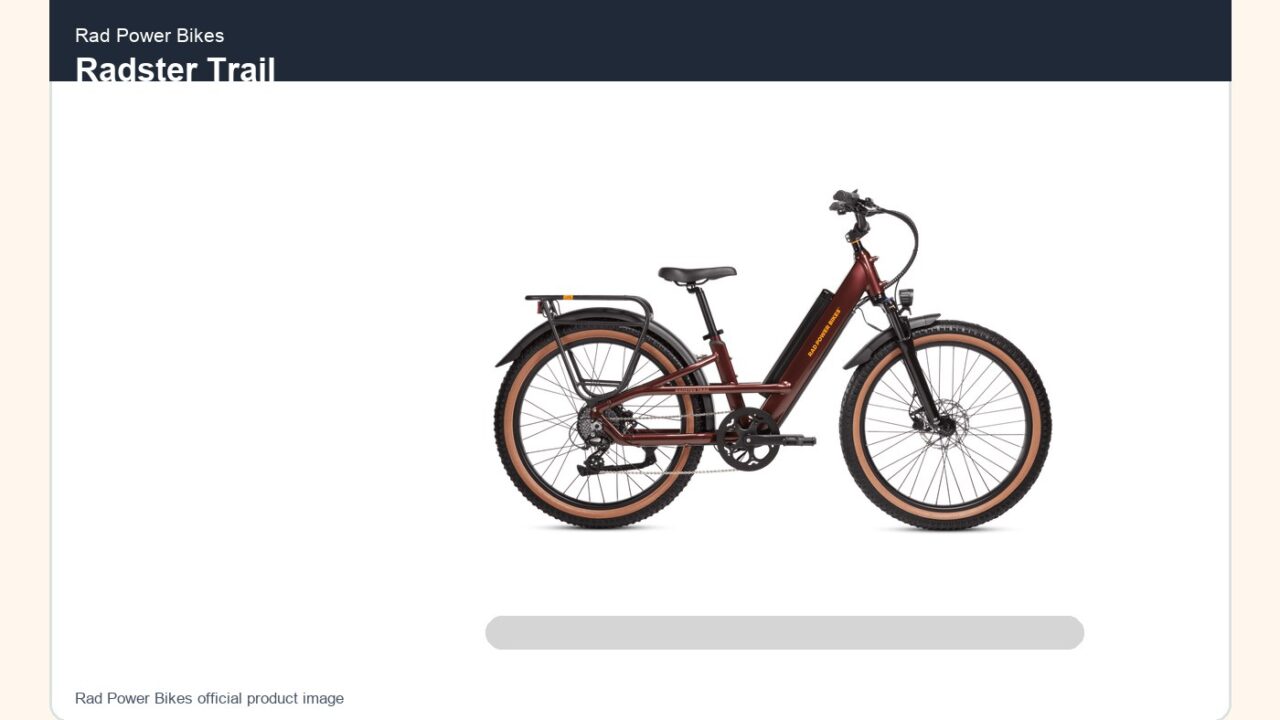
Product photos are useful when they show the whole bike from the side, the cockpit, the drivetrain side, rack mounting points, tire clearance, lighting, and battery placement. A clean hero image is not enough by itself because many ownership details live in the small angles.
I pay close attention to cable routing, fender clearance, rack attachment points, the shape of the step-through opening, and whether the display and controls look easy to reach. Those details can reveal whether a bike was designed around everyday use or mainly around a spec sheet.
A Better Final Check
Before buying, make a quick pass through five questions: where will the bike sleep, where will the battery charge, who will service it, what class is allowed on the main route, and what accessory will be needed on day one.
If any of those answers feels awkward, the bike may still be good but not good for your situation. That last practical check is often more useful than reading one more range claim or waiting for one more seasonal sale.
FAQ
Do recreational riders need fat tires?
Not always. Fat tires help on sand, snow, and rough surfaces, but they add weight and rolling resistance.
Is a Class 3 e-bike good for paths?
Maybe not. Some paths restrict faster Class 3 bikes, so check local rules first.
How much range is enough for weekend rides?
Many riders are comfortable with 30-50 real-world miles, but hills and high assist can reduce that.
Final Verdict
The right weekend e-bike is the one that makes casual rides easy to start and pleasant to repeat.
A final practical lens is resale and long-term ownership. A recognizable brand with replacement batteries, ordinary tire sizes, clear support documentation, and a real warranty is easier to live with after the excitement of delivery day fades. That does not mean every expensive bike is better, but it does mean a low advertised price should be weighed against support, parts, and the cost of fixing problems later.
For U.S. riders, route context is especially important because infrastructure changes block by block. A bike that feels perfect on a protected path may feel different on a shoulder next to fast traffic. Build your shortlist around the hardest parts of your route: starts from stop signs, bridge climbs, broken pavement, storage doors, theft risk, and weather exposure.
Before purchasing, take measurements seriously. Compare the listed rider height range with your inseam, reach preference, and comfort limitations. If two bikes look similar, the one with the better fit, clearer support channel, and easier storage plan often becomes the better real-world choice.
A final practical lens is resale and long-term ownership. A recognizable brand with replacement batteries, ordinary tire sizes, clear support documentation, and a real warranty is easier to live with after the excitement of delivery day fades. That does not mean every expensive bike is better, but it does mean a low advertised price should be weighed against support, parts, and the cost of fixing problems later.
For U.S. riders, route context is especially important because infrastructure changes block by block. A bike that feels perfect on a protected path may feel different on a shoulder next to fast traffic. Build your shortlist around the hardest parts of your route: starts from stop signs, bridge climbs, broken pavement, storage doors, theft risk, and weather exposure.
Before purchasing, take measurements seriously. Compare the listed rider height range with your inseam, reach preference, and comfort limitations. If two bikes look similar, the one with the better fit, clearer support channel, and easier storage plan often becomes the better real-world choice.
A final practical lens is resale and long-term ownership. A recognizable brand with replacement batteries, ordinary tire sizes, clear support documentation, and a real warranty is easier to live with after the excitement of delivery day fades. That does not mean every expensive bike is better, but it does mean a low advertised price should be weighed against support, parts, and the cost of fixing problems later.
For U.S. riders, route context is especially important because infrastructure changes block by block. A bike that feels perfect on a protected path may feel different on a shoulder next to fast traffic. Build your shortlist around the hardest parts of your route: starts from stop signs, bridge climbs, broken pavement, storage doors, theft risk, and weather exposure.
Before purchasing, take measurements seriously. Compare the listed rider height range with your inseam, reach preference, and comfort limitations. If two bikes look similar, the one with the better fit, clearer support channel, and easier storage plan often becomes the better real-world choice.
A final practical lens is resale and long-term ownership. A recognizable brand with replacement batteries, ordinary tire sizes, clear support documentation, and a real warranty is easier to live with after the excitement of delivery day fades. That does not mean every expensive bike is better, but it does mean a low advertised price should be weighed against support, parts, and the cost of fixing problems later.
For U.S. riders, route context is especially important because infrastructure changes block by block. A bike that feels perfect on a protected path may feel different on a shoulder next to fast traffic. Build your shortlist around the hardest parts of your route: starts from stop signs, bridge climbs, broken pavement, storage doors, theft risk, and weather exposure.
Before purchasing, take measurements seriously. Compare the listed rider height range with your inseam, reach preference, and comfort limitations. If two bikes look similar, the one with the better fit, clearer support channel, and easier storage plan often becomes the better real-world choice.
A final practical lens is resale and long-term ownership. A recognizable brand with replacement batteries, ordinary tire sizes, clear support documentation, and a real warranty is easier to live with after the excitement of delivery day fades. That does not mean every expensive bike is better, but it does mean a low advertised price should be weighed against support, parts, and the cost of fixing problems later.
For U.S. riders, route context is especially important because infrastructure changes block by block. A bike that feels perfect on a protected path may feel different on a shoulder next to fast traffic. Build your shortlist around the hardest parts of your route: starts from stop signs, bridge climbs, broken pavement, storage doors, theft risk, and weather exposure.
Before purchasing, take measurements seriously. Compare the listed rider height range with your inseam, reach preference, and comfort limitations. If two bikes look similar, the one with the better fit, clearer support channel, and easier storage plan often becomes the better real-world choice.
A final practical lens is resale and long-term ownership. A recognizable brand with replacement batteries, ordinary tire sizes, clear support documentation, and a real warranty is easier to live with after the excitement of delivery day fades. That does not mean every expensive bike is better, but it does mean a low advertised price should be weighed against support, parts, and the cost of fixing problems later.