
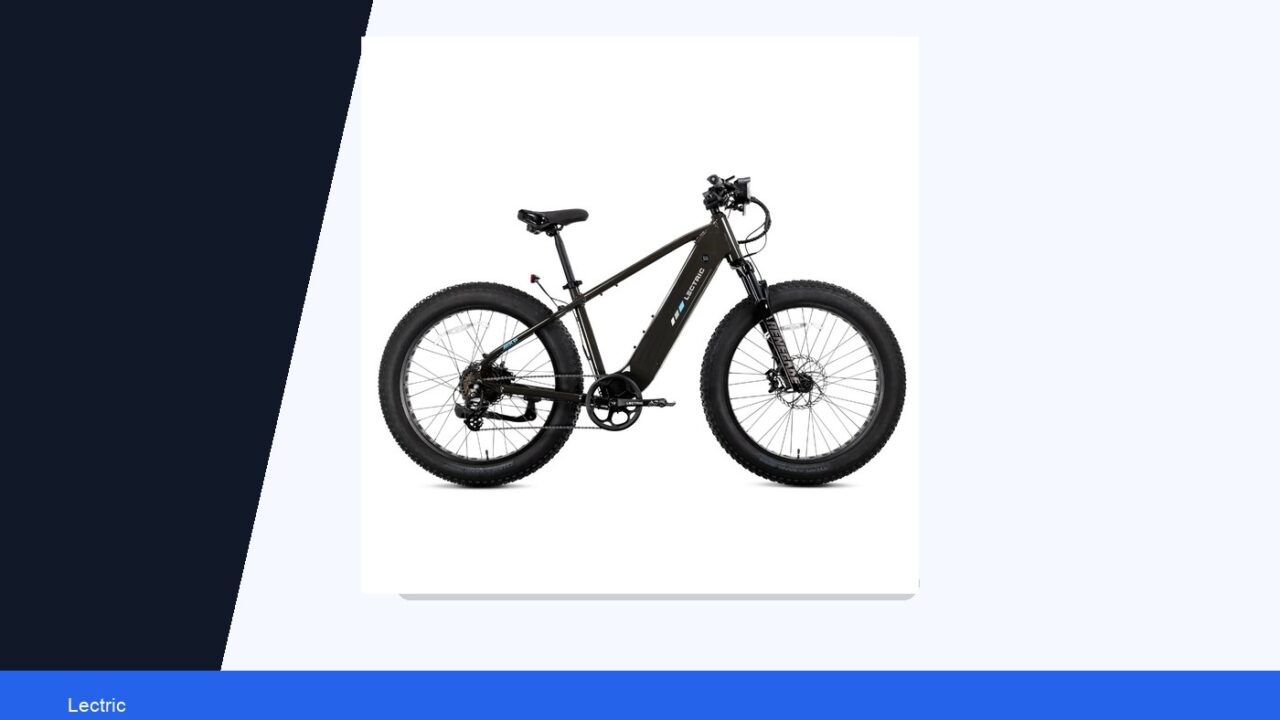
Lectric E-Bike Brand Guide: Value, Folding Utility, and the XP Formula is a brand-level overview for shoppers who want to understand the lineup before opening ten product tabs. The goal is to spot the riders each brand serves best and the ownership details that deserve a second look.
Frame shape and weight matter daily.
Use route plus margin, not best-case claims.
Parts and service decide long-term value.


Where the Brand Fits
Lectric is built around aggressive value and practical utility. It is often the brand shoppers discover when they want a folding e-bike, a first commuter, or a cargo-capable model without spending boutique-bike money. The tradeoff is that buyers should be comfortable confirming assembly, service, and accessory fit before ordering.
Best For
- value shoppers who still want a recognizable brand
- apartment riders considering a folding e-bike
- utility riders who want cargo features without premium pricing
What to Watch
- folding does not always mean easy to carry; check weight and folded dimensions
- budget pricing can mean compromises in refinement
- local shop service acceptance varies by city
Model Snapshot
| Model | Best use | Why it matters |
|---|---|---|
| XP4 | folding utility and budget commuting | The XP family is the heart of Lectric’s appeal: compact, value-focused, and widely recognized. |
| XPedition | cargo and family errands | A cargo direction for riders who need utility without premium cargo-bike pricing. |
| XPeak | fat tire adventure | A more rugged option for riders who want larger tires and rougher-road confidence. |
| ONE | lower-maintenance commuting | A cleaner drivetrain direction for riders who dislike derailleur upkeep. |
Ride Feel and Position
The first thing to compare is posture. Some e-bikes feel like traditional bicycles with a quiet boost; others feel closer to compact mopeds or utility vehicles. Neither is automatically better. City riders often want an upright position, predictable steering, integrated lights, and fenders. Recreational riders may care more about tire volume and mixed-surface confidence. Cargo riders should look at wheelbase, accessory ecosystem, and total payload before motor size.
Battery, Range, and Charging
Range claims are useful as a starting point, but they are not a promise for every rider. Real range changes with rider weight, cargo, hills, wind, temperature, tire pressure, and assist level. A practical buyer should compare battery watt-hours, charger convenience, removable battery design, replacement battery availability, and how the bike will be charged at home or at work.

Service and Ownership
A direct-to-consumer e-bike can be a great value, but ownership is easier when replacement parts, manuals, dealer partners, and local service options are clear. Before ordering, ask whether a nearby shop will handle brakes, tires, drivetrain work, and basic assembly checks. If not, budget time for home maintenance or mobile service.
How It Compares
Lectric should not be evaluated in isolation. Aventon tends to feel polished and commuter-friendly, Lectric is aggressive on value and compact utility, Rad Power Bikes has a strong cargo and utility identity, Ride1Up is often attractive to riders who want value with a more bicycle-like ride, and Velotric is strongest when comfort and direct-to-consumer pricing line up with the route.
Buying Advice
Do not let a sale timer make the decision for you. Compare the final delivered price, warranty terms, return policy, assembly requirements, accessories you still need to buy, and whether the bike fits your storage routine. A slightly more expensive bike can be cheaper in the long run if it includes lights, fenders, rack mounts, better brakes, or a more realistic support path.
Alternatives to Compare
- Aventon e-bike brand guide
- Lectric e-bike brand guide
- Rad Power Bikes brand guide
- Ride1Up e-bike brand guide
- Best Electric Bike Brands in the U.S.
What The Lineup Says About The Brand
When I look at Lectric E-Bike Brand Guide: Value, Folding Utility, and the XP Formula, I pay attention to how clearly the lineup is organized. A useful brand makes it easy to understand which bikes are for commuting, utility riding, compact storage, light recreation, or rougher surfaces without forcing every shopper into the same model.
A strong lineup should also have logical parts continuity. If every model uses unusual components or hard-to-source accessories, the bike may be more difficult to live with than the product page suggests. That is especially important for online-first brands where service support depends on documentation, replacement parts, and responsive customer care.
I also like to see a brand explain sizing and rider fit in plain language. E-bikes are heavy enough that a poor frame fit is not a small inconvenience; it can affect confidence at stops, mounting, braking, and low-speed turns.
Where This Brand May Or May Not Fit
Brand fit is less about finding a universal winner and more about matching priorities. Some riders should favor dealer-backed service and test rides. Others may be comfortable buying online if the value is strong and the assembly process is realistic for their household.
The strongest reason to shortlist a brand is consistency: clear sizing, believable range guidance, easy-to-find battery information, and enough owner support to make the purchase feel maintainable rather than disposable.
A brand is harder to recommend when the lineup is confusing, the replacement battery path is unclear, or the product pages lean heavily on discounts without making the ownership picture easy to understand.
What I Would Compare Against It
For most shoppers, the useful comparison is not just another model at the same price. It is another buying path: a local bike-shop e-bike, a less expensive online model, and a slightly more expensive bike with stronger support or included accessories.
That three-way comparison makes the tradeoffs easier to see. You can decide whether the brand is winning on ride category, service confidence, component value, compact storage, cargo capability, or simple price.
How I Would Use This Information
The best way to read this guide is to start with the job the bike has to do. A weekend path bike, a daily commuter, a compact apartment bike, and a car-replacement cargo setup can all look similar in photos, but they ask very different things from the frame, battery, tires, and brakes.
I also like to separate showroom appeal from ownership fit. A big battery, fat tires, or a powerful motor can be useful, but those same features can add weight, slow down handling, or make the bike harder to lift, store, and service. The right choice is usually the bike that solves the boring daily details with the least friction.
That is why I would not read any recommendation as a universal ranking. A bike that is excellent for a garage, a flat commute, and weekend rail trails may be a poor match for a third-floor apartment or a rider who needs dealer support nearby.
The Details That Matter After Delivery
Before choosing any model, check the return policy, warranty terms, replacement battery availability, brake and tire sizes, and whether a local shop is willing to work on that brand. Those details rarely feel exciting while shopping, but they can decide whether the bike still feels like a good purchase in year two.
For U.S. riders, I would also check local class rules and where the bike will actually be used. A faster setup is not automatically better if the local trail system, campus, beach path, or neighborhood greenway restricts throttle use or Class 3 operation.
Assembly is another quiet detail. Some direct-to-consumer e-bikes are easy to finish at home, while others are better handled by a shop, especially if the buyer is not comfortable adjusting brakes, tightening cockpit hardware, or checking wheel alignment.
How To Read Product Photos
Product photos are useful when they show the whole bike from the side, the cockpit, the drivetrain side, rack mounting points, tire clearance, lighting, and battery placement. A clean hero image is not enough by itself because many ownership details live in the small angles.
I pay close attention to cable routing, fender clearance, rack attachment points, the shape of the step-through opening, and whether the display and controls look easy to reach. Those details can reveal whether a bike was designed around everyday use or mainly around a spec sheet.
A Better Final Check
Before buying, make a quick pass through five questions: where will the bike sleep, where will the battery charge, who will service it, what class is allowed on the main route, and what accessory will be needed on day one.
If any of those answers feels awkward, the bike may still be good but not good for your situation. That last practical check is often more useful than reading one more range claim or waiting for one more seasonal sale.
A More Useful Way To Decide
For Lectric E-Bike Brand Guide: Value, Folding Utility, and the XP Formula, the useful lens is brand support. I would start by asking what the bike or topic needs to solve in a normal week, then work backward from storage, charging, route type, rider confidence, and service expectations.
That order keeps the decision grounded. It is easy to compare specs for an hour and still miss the basic problem: a bike can be powerful, attractive, and discounted while still being too heavy, too awkward to store, or too specialized for the rider's actual roads.
Where I Would Be Careful
Compare the brand's warranty language, battery replacement path, dealer or mobile-service options, assembly expectations, and accessory ecosystem. A cheaper bike can still be the expensive choice if a routine part becomes hard to source.
I would slow down if the product page hides key details, if replacement parts are difficult to find, if sizing guidance is vague, or if the buying decision depends entirely on a short-term sale. A good e-bike purchase should still make sense after the banner discount disappears.
What To Compare Next
The nearest alternatives are usually a dealer-backed commuter, a lower-cost online bike, and a more premium model with stronger local support. Put all three against the same route and storage problem before deciding.
When two options look close, compare the reason each one exists. One may be built for comfort, another for value, another for portability, and another for higher-speed road commuting. The best choice is the one whose design intent matches the rider instead of merely matching the budget.
Living With The Bike After Week One
Imagine the bike one month after delivery. It should be easy to charge, easy to lock, easy to park, and easy enough to ride that it becomes a normal transportation tool rather than a weekend novelty.
That ownership test is intentionally plain. The right e-bike does not need to win every comparison chart; it needs to keep solving the same real problem without creating a new one.
A Real-World Example
For Lectric E-Bike Brand Guide: Value, Folding Utility, and the XP Formula, I would run the recommendation through a simple real-world scenario rather than stopping at the comparison table.
Think about two shoppers comparing the same brand. One has a garage, basic tools, and comfort assembling an online bike. The other lives upstairs and wants a local shop to handle adjustments. The same model can be a reasonable buy for one rider and a poor fit for the other.
That is why brand reviews should not read like cheerleading. The brand may offer strong value, but the buyer still has to decide whether support, delivery, assembly, sizing, and replacement parts match the way they plan to own the bike.
That kind of scenario check keeps the final decision honest. It turns the article from a list of features into a buying decision a real person can actually use.
Final Reader Note
The reason to spend extra time with Lectric E-Bike Brand Guide: Value, Folding Utility, and the XP Formula is not to make the purchase more complicated. It is to remove the surprises that usually show up after delivery, when the bike has to fit real streets, real storage, and real riding habits.
A good decision should feel clear even without a sale banner or a dramatic spec advantage. If the bike, rule, or maintenance habit still makes sense in ordinary use, through changing seasons and normal weekly routines, it is much more likely to be the right answer.
FAQ
Is Lectric a good e-bike brand?
Lectric can be a good fit for the right rider, but compare the exact model, local service support, warranty terms, and current price before buying.
Should I buy online or from a local dealer?
Online brands can offer strong value. Local dealers can make fit, assembly, and service easier. The better choice depends on your mechanical comfort and nearby support.
What matters more: motor watts or battery size?
Neither number tells the whole story. Fit, total weight, braking, sensor feel, service access, and route demands matter just as much.
The Practical Bottom Line
Lectric belongs on the shortlist when its model lineup matches your route, storage, and support needs. Treat this as a starting point, then confirm current specs and pricing on the official brand site before buying.